As we look back over 2025, it is worth starting with the context set by the year before. In 2024, ITOOSOFT marked its 25th anniversary, reflecting on a path that began with ForestPack in 1999 and grew to include RailClone, ForestIvy, and a wider ecosystem of tools for 3ds Max artists. That year also brought a rebrand from iToo Software to ITOOSOFT, a refreshed visual identity, a new website, and the release of ForestPack 9 with the introduction of ForestIvy as a standalone plugin, reinforcing our long-term direction as an independent, user-focused company.
Building on that strong foundation, 2025 was a year of momentum rather than change of course. The focus was on refinement, reliability, and practical improvements across ForestIvy, ForestPack, and RailClone. By concentrating on day-to-day workflows and real production needs, the year strengthened trust in the tools and confirmed their role in solving problems artists face in real projects.
Industry changes and challenges
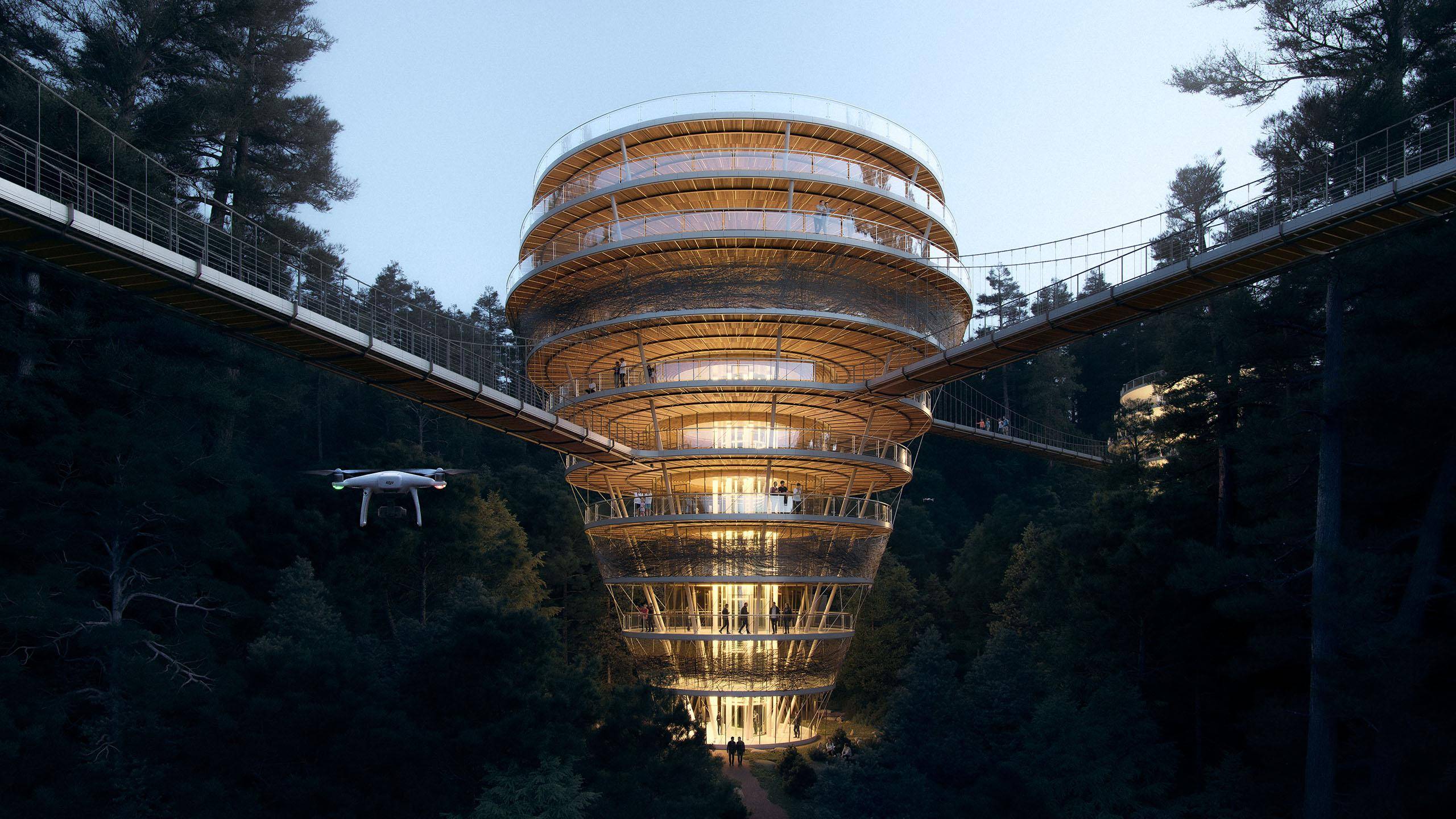
Image Credit: Reverso Studio
Looking beyond our own releases, 2025 was also a year that highlighted several broader shifts across the CG and architectural visualisation industry.
One of the most visible trends has been the continued consolidation of tools and platforms. Through acquisitions and restructuring, many core parts of the production pipeline are now controlled by a relatively small number of companies. This can bring tighter integration between tools, but it also concentrates decision-making and reduces diversity in how software evolves. Against that backdrop, ITOOSOFT remains deliberately independent. This independence allows development priorities to stay closely aligned with the needs of artists and studios, rather than being driven by wider portfolio strategy.
At the same time, the growth of bundled asset libraries has changed expectations around content. Many platforms now include large collections of models, materials, and environments as part of the tool itself. This has raised the baseline quality users expect, but it has also made the market more challenging for vendors offering individual, static assets. Increasingly, the value lies in content that saves measurable time. Niche, production-ready objects, flexible parametric systems, and presets that support fast iteration have become more relevant than single models. This shift reinforces our focus on procedural libraries for RailClone and ForestPack, where one setup can generate a wide range of results with minimal adjustment.
AI was impossible to ignore in 2025, and discussion around it reached nearly every corner of the industry. While it is already proving useful for certain tasks, its impact on day-to-day production pipelines remains gradual rather than disruptive. In practical terms, AI currently tends to save more time in supporting stages such as iteration, variation, clean-up, and presentation than in core modelling and layout work. It is a valuable addition to the toolbox, but not a replacement for established 3D workflows.
One clear effect is that simpler jobs can now be completed more quickly, and the general standard of acceptable imagery continues to rise. As a result, expectations around speed and quality are shifting, even when the underlying production methods remain largely unchanged. In that environment, tools that prioritise reliability, control, and efficient iteration continue to matter.
ForestIvy: more believable growth and usable animation

ForestIvy developed significantly this year. One of the most notable additions was the introduction of procedural wind animation. For the first time, ivy could move convincingly and it's as easy as enabling a couple of toggles.
ForestIvy’s modelling also received important improvements. Tapered branches allow vines to narrow naturally toward their tips instead of maintaining a uniform thickness.
Workflow flexibility improved too. Baselines can now be extended interactively by painting, making it easier to adapt growth to late design changes without redrawing paths You can also import and export baseline and use standard 3ds Max splines. Ivy can also grow without a surface, following free-form paths through space for spirals, suspended growth, or sculptural designs.
Many more improvements were included which made ForestIvy more flexible, more artist-friendly, and now suitable for both still imagery AND animation.
ForestPack: stronger scattering control and studio-friendly workflows

Image Credit: Beauty and the Bit
ForestPack updates this year focused on scattering behaviour, asset management, and stability in large real-world production scenes.
One of the most useful additions was requested by our users. You now have the option to treat distribution maps as grayscale density maps, rather than simple black-and-white masks.
Another suggestion: painting workflows were improved by allowing artists to paint and erase using keyboard shortcuts, keeping the process fluid without switching tools. Scale randomisation by area made it easier to suggest natural growth variation or maintained zones, such as trimmed edges along paths, within a single ForestPack object.
Later updates concentrated on pipeline and usability improvements. Artists gained full control over where libraries are installed, including support for shared network locations. Texture relinking options were expanded to better support structured library paths and distributed rendering environments.
ForestSet also received several updates. Update behaviour became clearer and more predictable, unnecessary rebuilds were reduced, and feedback messages improved when areas are unavailable due to distribution settings.
Individually, many of these changes were modest. Combined, they made ForestPack more reliable and easier to integrate into studio pipelines.
RailClone: deeper spline control and expanding system libraries

Image Credit: AVEO Studio
RailClone had a major year with the release of RailClone 7, followed by a number of updates that further reinforced its status as the "ultimate tool for procedural modelling and scene assembly in 3ds Max". As one of our users recently put it: "How can archviz artists NOT be using RailClone".
RailClone 7 introduced a new category of Spline Operators inside the Style Editor, allowing advanced spline manipulation to stay procedural. These tools support spline combination, transformation, padding, subdivision, boolean operations, offsets, catenary curves, connections between splines, shape generation, conforming paths to terrain, and more.
At the same time, RailClone Systems began to grow as a practical library aimed at speeding up common modelling tasks. New collections such as Iron Railings and Wooden Balustrades were designed to be adjusted through parameters rather than graph editing. Users can modify spacing, height, rails, and deformation directly, which keeps setup fast while preserving flexibility.
Updates after the initial release added workflow improvements such as non-rendering Segment and Transform nodes, smarter sequencing options, clearer spline preview behaviour, portable library formats, improved texture handling, and more.
RailClone continues to go from strength to strength and should not be overlooked as part of every artists professional toolkit. Once you've learnt it, you'll wonder how you modelled without it!
Tutorials and showcases: sharing workflows and real results
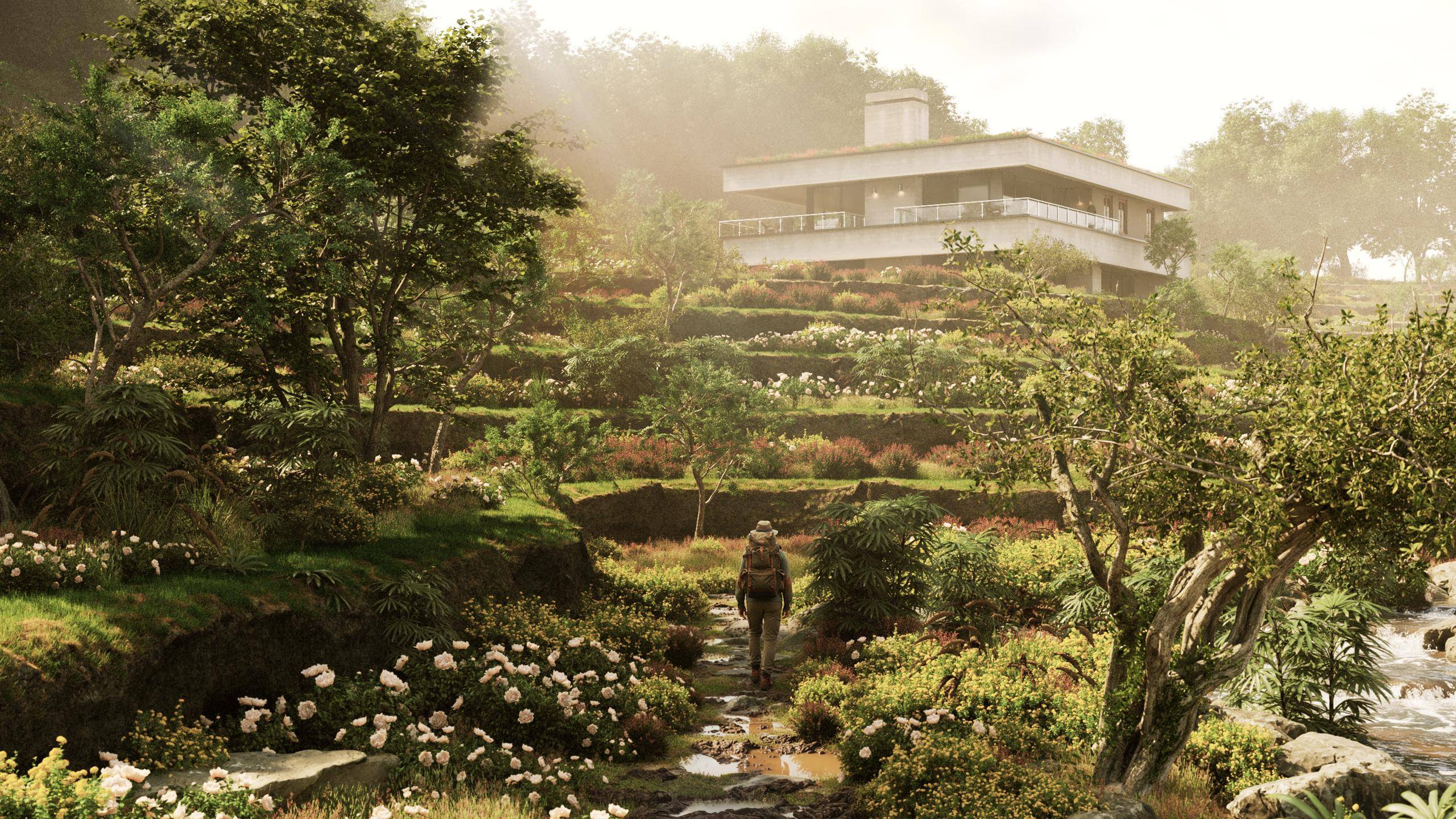
Throughout the year, ITOOSOFT shared content shaped around busy schedules and changing habits. More than 25 short tutorials and workflow tips focused on everyday tasks that arise in real projects, offering practical guidance that could be picked up and applied quickly.
Long-form learning remained part of our approach. Two new introductory tutorials for ForestPack and RailClone were released to help new users get started with confidence and understand core ideas without needing to set aside large blocks of time. These tutorials form the starting point for a broader learning structure that will be extended in 2026, with clearer paths intended to support artists as they progress from first use through to more advanced workflows.
Alongside this educational content, we continued to publish weekly showcases and case studies highlighting work from studios, freelancers, and students using ITOOSOFT tools. The projects shared across the year reflected the wide range of ways ForestIvy, ForestPack, and RailClone are used, from architectural visualisation and competition entries to personal projects, short films, games, and VFX.
100,000 support cases: a milestone built on trust
One milestone stood apart from software releases this year. ITOOSOFT reached 100,000 support cases.
This figure reflects a long-term commitment to direct, in-house support. From the beginning, support has been treated as part of the product itself, handled by people who know the tools and take pride in helping others use them well.
The number only tells part of the story. It counts cases logged through our current support platform and does not include personal emails, replies on social platforms, or ongoing conversations that continue without generating new case IDs. It also represents only a portion of our 25 years of activity. When viewed in that wider context, the number of people we have supported over time is far greater.
Thank you to everyone who has reached out with a question, a problem, or an idea. Each conversation helps shape the tools and the support experience we continue to build.
Looking ahead
Looking ahead, our plans are guided by a few simple principles. Stay independent, stay close to the day-to-day work of 3D artists, and keep finding practical ways to make that work easier.
Being independent allows us to listen carefully and respond quickly. It means spending time understanding real pain points and focusing our efforts on reducing them, whether that is through new features, better workflows, or clearer libraries and presets. That approach will continue to shape how ForestIvy, ForestPack, and RailClone develop.
You will also see more of us in person. Over the coming year we plan to attend most major European events. These are valuable opportunities to talk face to face, see how the tools are being used in real projects, and hear what matters most to the people using them. If you see us there, please come and say hello.
We will be bringing back our livestreams too. They took a back seat recently while other work was prioritised, but they were well received and we have missed them. The plan is to use them as an open space to share updates, walk through workflows, and answer questions in a relaxed, informal way.
Above all, we want to remain approachable. The people behind ITOOSOFT are real, accessible, and closely involved in the products they build. That closeness helps us stay agile and grounded in real production needs.
For more than 25 years, nearly all the digital vegetation in 3ds Max has been scattered using our tools. We're going to be there for the next chapter too, supporting artists as they create a new generation of images and environments, and continuing the conversations that have shaped ITOOSOFT from the start.
Related Post
Explore more articles from the ITOOSOFT team

19 new spline features, new libraries, macro improvements and much more.

Two new parametric railing libraries join RailClone Systems, alongside RailClone updates with fixes and improvements.

See what's new in ForestPack 9.3